Key Takeaways
- Surgical-Depth Targeting: HIFU uses focused ultrasound energy to reach the SMAS layer, the same tissue plane targeted in a surgical facelift.
- Melanin-Blind Mechanism: Safe for all skin tones as it bypasses the epidermis without targeting melanin.
- Single Session Focus: Most protocols require only one session, with results peaking 3-6 months post-treatment as new collagen forms.
- No Downtime: A fully non-invasive treatment with minimal recovery, appealing to patients avoiding surgical risks.
HIFU (High-Intensity Focused Ultrasound) uses focused sound waves to deliver thermal energy deep into the skin, bypassing the surface entirely to target the SMAS layer, the same fibrous tissue plane surgeons tighten during a facelift, without any incision. Originally developed for tumor ablation in oncology, HIFU transitioned into aesthetic medicine over the past decade and has become one of the most widely adopted non-invasive lifting technologies, precisely because it reaches the same structural layer as surgery while requiring no cutting and minimal downtime.
This guide covers how HIFU differs from radiofrequency and laser skin tightening, what the clinical evidence shows for facial lifting and body contouring, who is a good candidate, and how to choose the right system.
Entity attributes clinics should know:
- Technology basis: Focused ultrasound energy, not light or radiofrequency, delivering heat at a precise depth and focal point
- Target layer: The SMAS (superficial muscular aponeurotic system), the deep tissue plane targeted surgically in a facelift
- Clinical origin: Originally used for tumor ablation, adapted for aesthetic skin tightening and body contouring
- Downtime: Minimal, most patients report only transient redness or mild swelling
- Typical result range: Documented skin laxity improvement of 18–30% in systematic review data
What Is HIFU and How Does It Work?
HIFU works by concentrating multiple ultrasound beams onto a single focal point beneath the skin's surface, similar to how a magnifying glass concentrates sunlight onto one spot, creating a precise zone of thermal coagulation at a specific depth while leaving the tissue above it largely undisturbed. This thermal injury triggers the body's natural wound-healing response, thickening and shortening existing collagen fibers while stimulating new collagen production over the following weeks and months, which is why HIFU results continue to improve for up to three to six months after a single session rather than appearing immediately.
The precision of the focal point is what separates HIFU from surface-heating technologies: energy passes through the epidermis with minimal effect and only converts to heat at the targeted depth, allowing treatment of the SMAS layer without disrupting the skin surface above it.
How Does HIFU Compare to Radiofrequency Skin Tightening?
Radiofrequency devices heat tissue through electrical current passed between electrodes, generally producing a broader, shallower heating pattern across the treated area rather than concentrating energy at one specific depth. HIFU's focused-beam mechanism instead targets a precise focal point and depth, allowing it to reach the deeper SMAS layer that radiofrequency alone typically cannot access effectively. This is why many clinics now offer combination protocols: retrospective data on combined HIFU and monopolar radiofrequency therapy found the large majority of patients showed clinically significant skin tightening improvement, with transient mild redness as the most common side effect and no serious adverse events reported.
What Does the Clinical Evidence Show for Facial Lifting?
A systematic review covering 45 clinical trials and cohort studies published between 2010 and 2024 found that HIFU produced significant efficacy in skin tightening, particularly in the lower face, neck, and periorbital (around the eyes) regions, with documented improvements in skin laxity ranging from 18% to 30%. That same body of research reported a favorable safety profile, with fewer than 5% of patients experiencing side effects beyond transient redness, swelling, or mild discomfort.
Specific eyelid-area research has also validated HIFU for the thin, delicate skin around the eyes, an anatomically challenging zone due to its proximity to the eye itself and higher risk of thermal injury, finding measurable tightening and rejuvenation of both upper and lower eyelids with high patient satisfaction and minimal downtime. Independent clinical studies on facial and neck treatment describe the same underlying mechanism: focused ultrasound creates a thermal coagulation zone extending from the superficial fat layer through the SMAS, thickening and shortening collagen fibers to increase tissue tension and produce a lifted, tightened appearance.
What Does the Evidence Show for Body Contouring?
Beyond facial applications, the same systematic review documented measurable circumference reduction in body contouring studies, extending HIFU's use beyond the face and neck into fat reduction and skin tightening on the abdomen, arms, and other body areas. The mechanism for body contouring differs slightly in energy settings and depth targeting compared to facial protocols, but relies on the same principle of focused thermal injury triggering tissue tightening and, at certain settings, localized fat cell disruption.
Does HIFU Work Across Different Skin Types?
One documented advantage of HIFU over light-based treatments like laser and IPL is that its mechanism doesn't rely on targeting melanin, meaning treatment produces minimal undesirable epidermal injury regardless of the patient's Fitzpatrick skin type. This makes HIFU a useful option for addressing skin laxity in darker skin tones, where light-based treatments carry higher risk of pigmentation complications, since the ultrasound energy bypasses the epidermis and converts to heat only at the targeted depth beneath.
Who Is a Good Candidate for HIFU Treatment?
HIFU works best on patients with mild to moderate skin laxity, particularly in the lower face, neck, and periorbital area, who want a lifting effect without surgery or extended downtime. Patients seeking dramatic, surgical-level correction for severe sagging are typically better candidates for surgical facelift procedures, since HIFU produces a noticeable but more gradual and moderate lift by comparison. Because results build over three to six months as new collagen forms, setting accurate patient expectations about timeline is as important as patient selection itself. Standard screening should also confirm the patient has no active skin infections, implants, or pacemakers in the treatment area, given the thermal and energy-based nature of the device.
Which HIFU Machine Should a Clinic Buy?
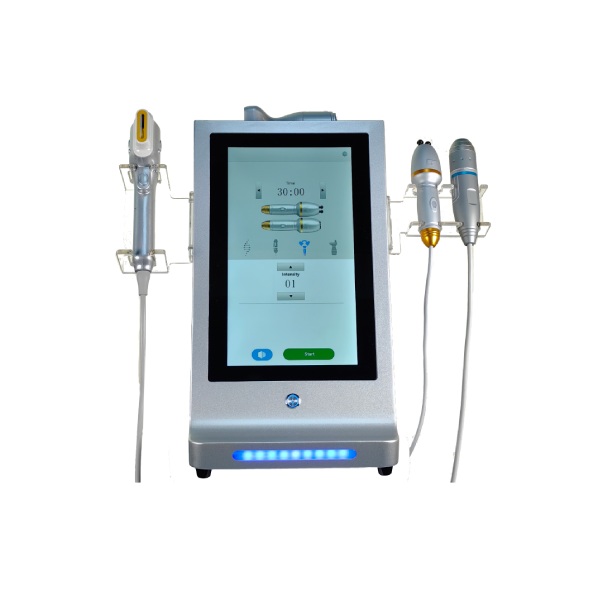
Rohaan Traders supplies HIFU systems built for clinics offering non-invasive lifting and body contouring services. Clinics building a broader non-invasive rejuvenation menu can compare HIFU against the Microneedle RF system in the full aesthetic machine catalog, since both target deeper tissue layers through different mechanisms and are frequently offered as complementary rather than competing services.
Every HIFU system ships with the 1 year warranty and CE certified training standard across Rohaan Traders' equipment range, and given how directly treatment safety depends on correct depth and energy settings, clinics should review aftersales and engineering support before purchasing to confirm consistent transducer calibration over years of use.
Frequently Asked Questions
How many HIFU sessions are needed to see results?
Most protocols involve a single session, with visible improvement building gradually over three to six months as new collagen forms, though some patients opt for a follow-up session at the one-year mark to maintain results.
Is HIFU painful?
Patients commonly report a warming or prickling sensation during treatment, with pain scores varying by individual tolerance and the specific depth setting used; most protocols involve no significant downtime beyond transient redness or mild swelling.
How is HIFU different from a facelift?
HIFU targets the same SMAS layer addressed surgically in a facelift, but does so non-invasively through focused ultrasound rather than incision and tissue repositioning, producing a more gradual, moderate lift without surgical downtime or scarring.
Does HIFU work on darker skin tones?
Yes. Since HIFU's mechanism doesn't rely on targeting melanin the way light-based treatments do, it produces minimal epidermal injury regardless of skin type, making it a lower-risk option for darker skin tones compared to certain laser treatments.
What support does Rohaan Traders provide with a HIFU purchase?
Every HIFU unit ships with a 1 year warranty, CE certified operator training, and 24/7 engineering support from teams based in Karachi and Dubai. Reach out through the contact page to book a free consultation, or visit the about page to learn more before purchasing.