Key Takeaways
- Vortex-Fusion Technology: Mechanized wand uses vacuum suction for exfoliation while simultaneously infusing hydrating serums into the skin.
- No Downtime: Relies on fluid dynamics instead of abrasive crystals (like microdermabrasion), resulting in little to no redness or flaking.
- Clinical Efficacy: Studies show measurable increases in dermal thickness and reduction in fine lines and pore size compared to manual serum application.
- Business Value: Offers a recurring revenue model (sessions every 4-6 weeks) with broad appeal across all skin tones and types.
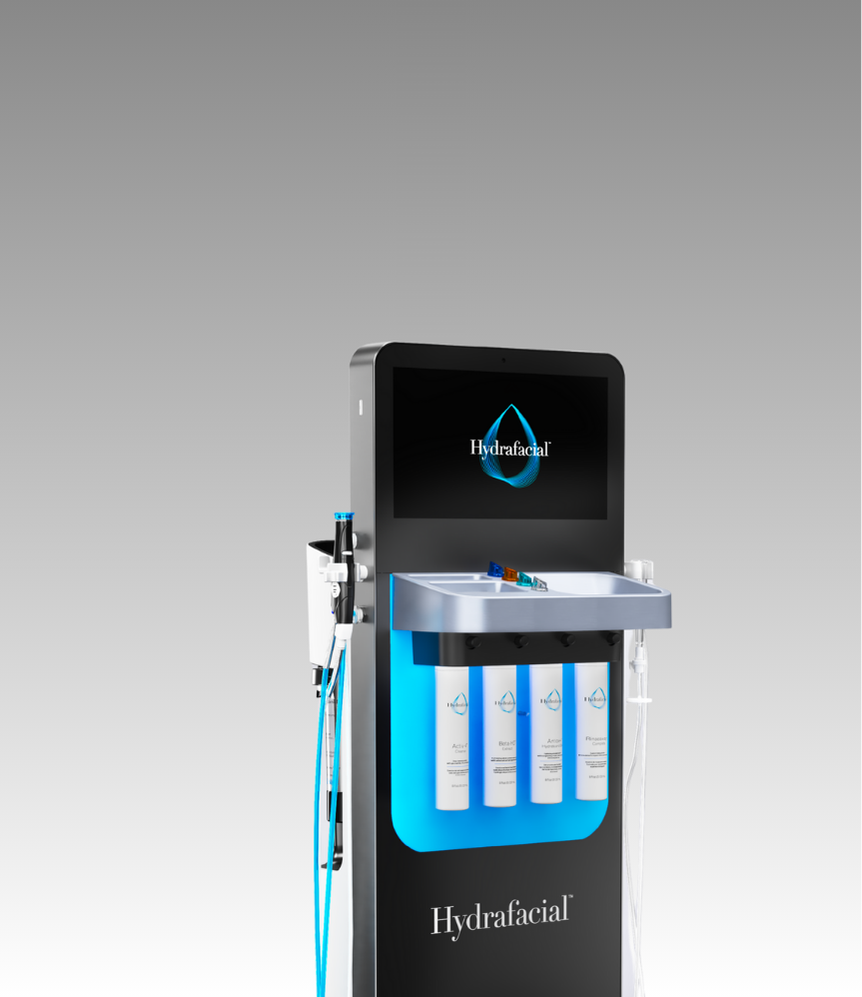
A Hydrafacial machine uses a vacuum-based wand to exfoliate the skin while simultaneously infusing hydrating serums, combining what's often called hydradermabrasion with targeted serum delivery in a single non-invasive treatment. Unlike traditional microdermabrasion, which relies on abrasive crystals or diamond tips against the skin, a Hydrafacial device uses fluid and suction to lift away dead skin cells, which is why the treatment produces little to no visible flaking or downtime for the client.
This guide covers the mechanism behind Hydrafacial machines, what the clinical evidence actually shows, how the treatment compares to microdermabrasion and chemical peels, and what clinics should evaluate before buying a system.
Entity attributes clinics should know:
- Core mechanism: Vacuum-based exfoliation paired with pneumatic (pressure-driven) serum delivery, sometimes called hydradermabrasion
- Treatment structure: Multi-step protocol covering cleansing, exfoliation, extraction, and hydration in one session
- Downtime: Minimal to none, results are visible immediately after a single session
- Maintenance schedule: Effects are cumulative but temporary, typically requiring a repeat session every 4-6 weeks
- Common concerns treated: Dryness, dullness, uneven texture, mild acne, fine lines, and enlarged pores
How Does a Hydrafacial Machine Actually Work?
A Hydrafacial machine works through a mechanized wand that moves across the skin, using vacuum suction to lift and remove dead skin cells while simultaneously delivering serums through the same tip, a combined process branded as vortex-fusion technology. The exfoliation step doesn't use loose abrasive crystals or a diamond-tip head like traditional microdermabrasion, instead relying entirely on fluid and suction, which is why sessions typically produce little to no visible flaking or irritation afterward.
The treatment follows a defined multi-step sequence rather than a single pass: cleansing and peeling to lift surface debris, vacuum-based extraction to clear pore congestion, and finally serum infusion to hydrate and address specific skin concerns like fine lines or uneven tone. Each step uses a different tip or attachment on the same handpiece, which is what allows one machine to address several skin concerns within a single appointment.
What Does the Clinical Evidence Actually Show?
Clinical research on Hydrafacial-branded treatments specifically, rather than generic hydradermabrasion devices, remains limited but growing, with the most rigorous published study being a 12-week open-label trial on the Clarifying Treatment protocol in patients with mild-to-moderate acne. That trial followed twenty adults through six treatments combining cleansing, peeling, vacuum extraction, and blue LED light, and found measurable improvement in acne severity scores in the majority of patients by the end of the study period.
A separate randomized study on hydradermabrasion more broadly, using a polyphenolic antioxidant serum, found that a course of six treatments produced measurable increases in epidermal and papillary dermal thickness on biopsy, along with visible reduction in fine lines and pore size, while the identical serum applied by hand without the device produced no detectable skin change. This distinction matters for clinics evaluating equipment purchases: the evidence suggests it's the vacuum and pressure-driven delivery mechanism itself, not the serum alone, that drives measurable skin change, which is the core justification for investing in a dedicated device rather than offering manual facials with the same product line.
Additional practice-level data reports meaningful hydration gains following a course of treatments, alongside improvements in texture and tone after a completed six-session series, though these come from clinic-reported outcomes rather than independently peer-reviewed trials, and should be weighed accordingly when used in patient-facing marketing.
What Skin Concerns Can Hydrafacial Treatments Address?
Hydrafacial treatments are marketed and used across a fairly wide range of skin concerns, though the strength of evidence varies by condition. Hydration and superficial texture improvement have the most consistent supporting data, since the mechanism directly targets surface exfoliation and moisture delivery. Mild-to-moderate acne shows documented improvement in the one branded clinical trial available, though broader claims about severe or cystic acne aren't well supported by current published research. Fine lines, dullness, and enlarged pores are commonly treated concerns with visible immediate results, though these effects are cosmetic and temporary rather than a treatment for underlying structural skin aging.
How Does Hydrafacial Compare to Microdermabrasion and Chemical Peels?
Traditional microdermabrasion relies on physical abrasion, either loose crystals or a diamond-tip wand, dragged across the skin to remove the outer layer of dead cells, which typically causes more visible redness and requires a short recovery window. Hydrafacial's vacuum-and-fluid mechanism achieves a comparable exfoliation result with substantially less irritation, which is the main reason many clinics have shifted client demand toward Hydrafacial-style treatments over classic microdermabrasion in recent years.
Chemical peels work through a different mechanism entirely, using acids to dissolve the bonds between dead skin cells rather than mechanically lifting them away, and can achieve deeper exfoliation than a Hydrafacial session, but with more downtime and a higher risk of irritation depending on peel strength. Hydrafacial machines often use a similar acid-based serum, commonly glycolic acid, within their exfoliation step, effectively combining a mild peel-like chemical action with mechanical vacuum extraction, which is why the treatment is frequently positioned as a middle ground between a standard facial and a more aggressive chemical peel.
Who Is a Good Candidate for Hydrafacial Treatment?
Hydrafacial treatments are broadly suitable across skin types and tones, since the mechanism doesn't rely on targeting melanin or a specific chromophore the way laser and IPL treatments do, making patient screening considerably simpler than for light-based devices. Clients with active skin infections, open lesions, or recent aggressive resurfacing procedures should typically wait until the skin has healed before treatment, and clinics should still take a standard skin history at intake despite the treatment's broad compatibility. Results are visible after a single session but are cumulative and temporary, meaning clients seeking sustained improvement in texture or hydration need a recurring treatment plan rather than a one-time visit.
What Should a Clinic Look For When Buying a Hydrafacial Machine?
Clinics evaluating a Hydrafacial-style purchase should look beyond the marketing claims and assess the practical factors that affect day-to-day use and return on investment.
Key purchase considerations:
- Number of built-in treatment modes: More attachment heads and pre-set protocols mean a wider range of bookable services from one machine
- Serum and consumable costs: Ongoing tip and serum costs affect per-treatment margin over the machine's lifespan
- Warranty and engineering support: Vacuum pumps and handpieces are the components most likely to need servicing, so responsive support matters
- Training provided: Staff need to be trained on protocol sequencing and skin assessment, not just device operation
- CE certification and compliance documentation: Important for both safety and for building client trust in a competitive clinic market
Which Hydrafacial Machine Should a Clinic Buy?
Rohaan Traders supplies two Hydrafacial systems built for clinics at different service levels. The POISE+ 9-in-1 Hydrafacial machine is designed for clinics wanting a broad multi-modality device, combining hydradermabrasion with additional attachments for a wider treatment menu from a single unit. The POISE GOLD Hydrafacial system is positioned as a premium option for clinics prioritizing a more refined finish and higher-end client experience. Clinics can compare both in the full aesthetic machine catalog to decide which fits their service menu and client base.
Every Hydrafacial system ships with the 1 year warranty and CE certified training standard across Rohaan Traders' equipment range, and clinics should review aftersales and engineering support before purchasing, since consistent vacuum pump calibration and handpiece maintenance is what keeps treatment results and client satisfaction predictable over years of regular use.
Frequently Asked Questions
How is Hydrafacial different from a regular facial?
A regular facial is typically performed by hand, while a Hydrafacial uses a mechanized wand for vacuum-based exfoliation and pressure-driven serum delivery, a mechanism that clinical research suggests drives measurably more skin change than the same serum applied manually.
How many sessions does a client need to see results?
Results are visible after a single session, but the effects are cumulative and temporary, so most protocols recommend a repeat treatment every 4 to 6 weeks to maintain results, with documented studies typically running a six-session course.
Does Hydrafacial work on all skin tones?
Yes. Since the treatment doesn't target melanin or rely on a specific chromophore the way laser and IPL devices do, it's broadly usable across skin tones with fewer screening restrictions than light-based treatments.
Is Hydrafacial effective for acne?
The one branded clinical trial available found improvement in mild-to-moderate acne severity scores after a six-session course, though evidence for more severe or cystic acne is limited, and clinics should set realistic client expectations accordingly.
What support does Rohaan Traders provide with a Hydrafacial purchase?
Every Hydrafacial unit ships with a 1 year warranty, CE certified operator training, and 24/7 engineering support from teams based in Karachi and Dubai. Reach out through the contact page to book a free consultation, or visit the about page to learn more before purchasing.