Key Takeaways
- Photoacoustic Effect: Ultra-short nanosecond pulses shatter ink into fragments cleared by the immune system, avoiding pure thermal damage.
- Dual-Wavelengths: 1064nm for dark inks and deeper penetration; 532nm for red, orange, and lighter colors.
- Dark Skin Safe: The 1064nm wavelength has low melanin absorption, making it safe and effective for treating darker skin types (Fitzpatrick IV-VI).
- Dual-Purpose Machine: Also effectively treats sun spots, birthmarks, and benign pigmented lesions.
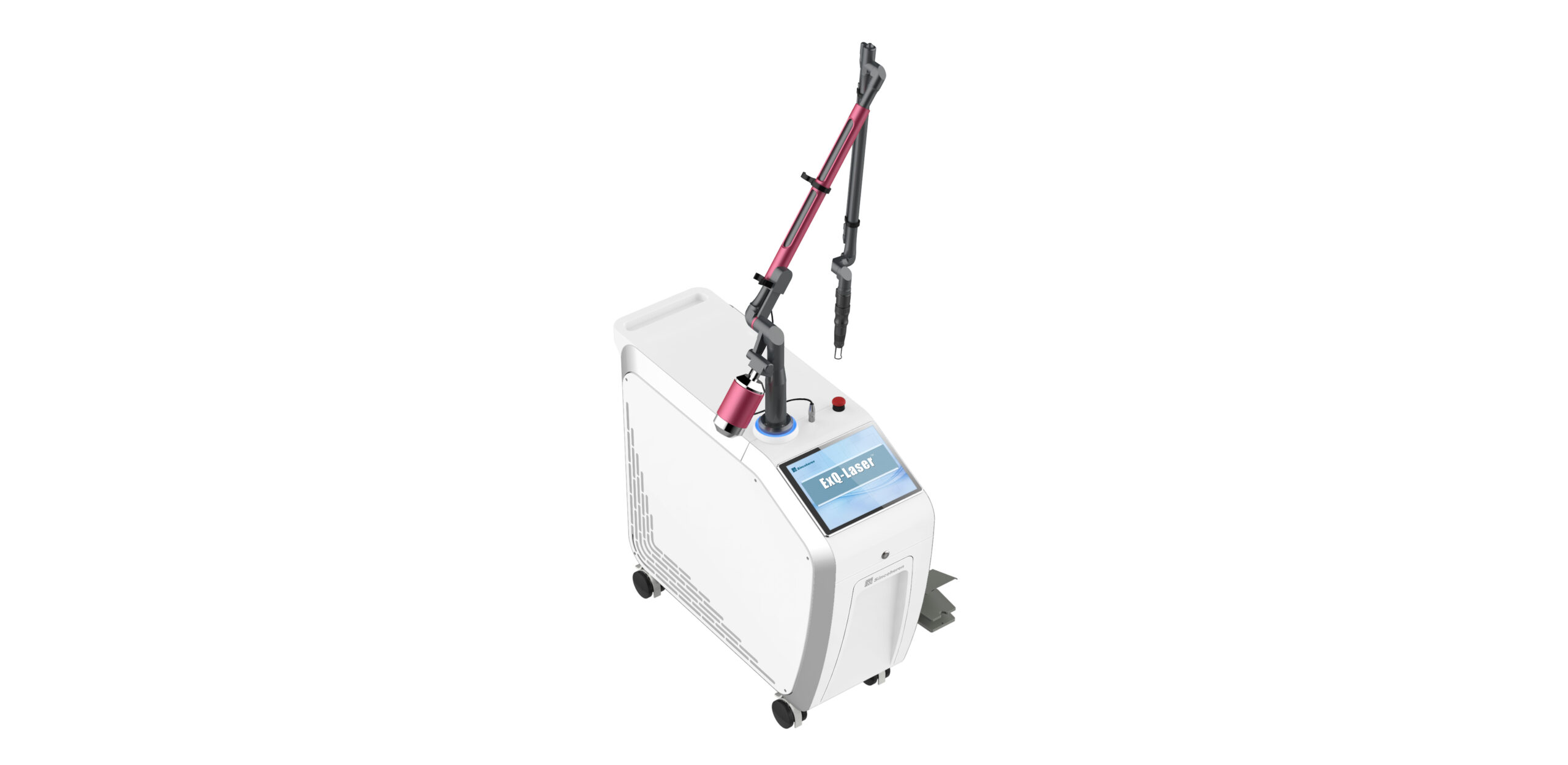
A Q-switched Nd:YAG laser delivers ultra-short, high-energy pulses in the nanosecond range, shattering tattoo ink and pigment particles inside skin cells through a photoacoustic effect rather than simple heating, which is why it remains the gold-standard laser technology for tattoo and pigmented lesion removal. The Nd:YAG crystal produces two usable wavelengths, 1064nm and 532nm, giving a single machine the ability to treat both dark ink in all skin types and brighter colored pigment in lighter skin, through a single dual-wavelength handpiece.
This guide covers the mechanism behind Q-switched Nd:YAG lasers, what the clinical evidence shows for tattoo removal across skin tones and ink colors, and how to choose the right system for a clinic's patient base.
Entity attributes clinics should know:
- Technology basis: Nanosecond-domain Q-switched pulses, not continuous-wave heating
- Primary wavelengths: 1064nm (deep penetration, safest for darker skin) and 532nm (targets red, orange, and brighter pigments)
- Mechanism: Photoacoustic effect, rapid heating creates an acoustic shockwave that ruptures pigment-containing cells
- Clinical endpoint during treatment: Immediate whitening of the treated area, sometimes with mild pinpoint bleeding
- Typical session count: 5 to 10 sessions spaced weeks apart, varying by ink density, color, and skin type
How Does a Q-Switched Nd:YAG Laser Actually Remove Ink?
Tattoo ink sits inside membrane-bound granules within skin cells like macrophages and fibroblasts, and a Q-switched laser's ultra-short, high-energy pulse causes those particles to heat so rapidly that it produces an acoustic shockwave, rupturing the granules and releasing the pigment into surrounding tissue. This photoacoustic effect is distinct from simple photothermal heating, since the pulse duration is short enough that the target shatters before heat has time to spread into surrounding tissue, which is what limits scarring and damage to skin outside the treatment zone.
Once ink particles are fragmented, the body's immune system, primarily through macrophage activity, gradually clears the smaller pigment fragments over the following weeks, which is why visible fading continues to progress between sessions rather than happening all at once during treatment.
Why Does the Nd:YAG Laser Use Two Wavelengths?
The Nd:YAG crystal's fundamental wavelength is 1064nm, which penetrates skin more deeply than other Q-switched laser types, reaching up to 2mm, and is only weakly absorbed by melanin, making it the safer wavelength choice for darker skin tones since it reduces the risk of unwanted pigment changes in surrounding skin. A frequency-doubled 532nm wavelength is generated from the same crystal and is better absorbed by red, orange, and certain brighter pigments that the 1064nm wavelength doesn't clear as effectively, though 532nm carries higher melanin absorption and is generally reserved for lighter skin types to avoid pigmentary side effects.
Choosing the right wavelength by case:
- 1064nm: Black and dark blue ink, all skin types including darker Fitzpatrick classifications, deeper-set or older tattoos
- 532nm: Red, orange, and select bright pigments, primarily in lighter skin types
- Dual-wavelength handpiece: Allows a single machine to switch between both, covering the majority of tattoo colors and skin tones a clinic will encounter
What Does the Clinical Evidence Show for Tattoo Removal?
A controlled dose-response study on Q-switched Nd:YAG laser treatment found an excellent response, defined as more than 75% ink removal, in the large majority of black tattoos after four treatment sessions, with no significant side effects including pigmentary changes or scarring reported. That same study found colored inks responded less effectively than black ink to the 1064nm wavelength, reinforcing why clinics need the 532nm option available for a broader color range.
A separate retrospective clinical evaluation found that actual treatment sessions needed were significantly lower than predicted by the standard Kirby-Desai difficulty scale, averaging roughly 5 sessions against a predicted 9.9, and confirmed that tattoo clearance continues to improve at long-term follow-up compared to short-term assessment, consistent with the ongoing immune clearance process following each session.
Is Q-Switched Nd:YAG Laser Safe for Darker Skin Tones?
Because the 1064nm wavelength is only weakly absorbed by melanin, clinical research has specifically validated its use in darker, more melanin-rich skin, where laser-based pigment removal historically carried higher risk of scarring or permanent pigment change. A study treating tattoos in very darkly pigmented skin found the majority of tattoos cleared 50% or more, with the large majority of patients experiencing no change in surrounding skin color, concluding that Q-switched Nd:YAG is a strong therapy choice specifically for patients at elevated risk of keloid scarring or pigment loss from tattoo removal. Separate research in Fitzpatrick skin type IV, common across Middle Eastern populations, similarly found effective and safe black tattoo clearance using a picosecond-domain Nd:YAG laser, with no severe side effects reported across the study group.
How Does Nanosecond Q-Switched Compare to Picosecond Lasers?
Nanosecond-domain Q-switched Nd:YAG lasers have been the established gold standard for tattoo removal for decades, relying primarily on the photothermal and photoacoustic mechanism described above. Newer picosecond-domain lasers deliver even shorter pulses, shifting the reaction further toward a nonlinear photoacoustic effect with less thermal component, which some studies suggest improves clearance of multicolor and difficult tattoos in fewer sessions. Nanosecond Q-switched systems remain widely used and clinically validated across a much larger body of long-term evidence, and continue to represent the accessible, proven entry point for clinics building a tattoo and pigment removal service line.
What Other Conditions Does Q-Switched Nd:YAG Treat?
Beyond tattoo removal, the same photoacoustic mechanism is used to treat pigmented lesions and dermal melanocytosis, since the underlying laser-skin interaction targets excess melanin deposits using the same selective photothermolysis principle. This makes a Q-switched Nd:YAG system a dual-purpose investment for clinics, serving both the tattoo removal market and patients seeking treatment for sun spots, certain birthmarks, and other benign pigmented conditions, without requiring a second dedicated device.
Which Q-Switched Nd:YAG System Should a Clinic Buy?
Rohaan Traders supplies Q-switched Nd:YAG laser systems built for clinics offering tattoo and pigment removal services. Clinics can compare it against the Diode USA Laser Bars and IPL systems in the full aesthetic machine catalog to build a complete service menu, since Q-switched Nd:YAG addresses tattoo and pigment removal specifically, a treatment category outside what diode or IPL systems are designed for.
Every Q-switched Nd:YAG system ships with the 1 year warranty and CE certified training standard across Rohaan Traders' equipment range, and because treatment safety depends heavily on correct wavelength and fluence selection for each patient's skin type and ink color, clinics should review aftersales and engineering support before purchasing to ensure consistent calibration over years of use.
Frequently Asked Questions
How many sessions does tattoo removal typically take?
Clinical data shows an average of around 5 sessions for meaningful clearance, though difficult or densely inked tattoos can require 6 to 10 or more sessions spaced several weeks apart to allow the body to clear fragmented ink between treatments.
Can Q-switched Nd:YAG remove all tattoo colors?
Black and dark blue ink respond most reliably to the 1064nm wavelength. Red, orange, and some brighter colors require the 532nm wavelength, and certain colors like green and light blue remain more difficult to clear with any Q-switched laser and may need alternative technology.
Is Q-switched Nd:YAG safe for darker skin types?
Yes. The 1064nm wavelength is only weakly absorbed by melanin, and clinical studies in darkly pigmented skin have found effective tattoo clearance with minimal risk of permanent pigment change, making it a preferred choice over shorter-wavelength lasers for these patients.
What does the treatment feel like, and is there downtime?
Patients typically describe a snapping sensation during treatment, with the treated area showing immediate whitening and possible mild pinpoint bleeding. Downtime is generally minimal, though the area may show redness or scabbing for several days as part of normal healing.
What support does Rohaan Traders provide with a Q-switched Nd:YAG purchase?
Every unit ships with a 1 year warranty, CE certified operator training, and 24/7 engineering support from teams based in Karachi and Dubai. Reach out through the contact page to book a free consultation, or visit the about page to learn more before purchasing.