Key Takeaways
- Photoacoustic Effect: Ultra-short nanosecond pulses shatter ink into fragments cleared by the immune system, avoiding pure thermal damage.
- Dual-Wavelength Versatility: The 1064nm wavelength treats dark inks safely on all skin types, while 532nm targets red/orange inks and superficial pigmentation.
- Dark Skin Safety: The 1064nm wavelength is considered the safest and most effective option for tattoo removal in Fitzpatrick skin types IV-VI.
- Treatment Protocol: Tattoos typically require multiple sessions (often 6-10) spaced 4-8 weeks apart to allow the immune system to clear the fragmented ink.
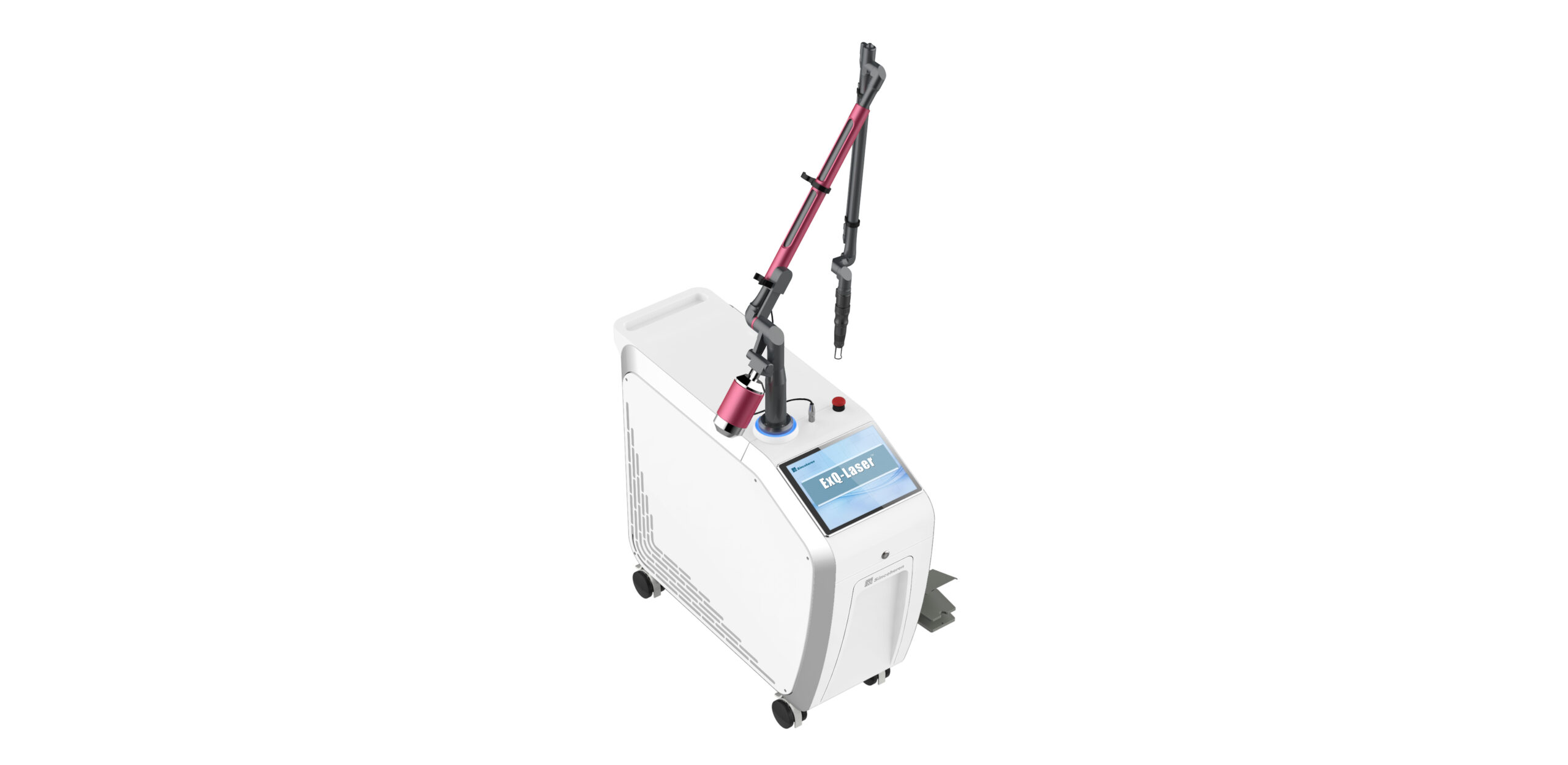
A Q-Switched Nd-YAG laser removes tattoos and pigmented lesions by delivering extremely short, high-energy pulses of light that shatter ink and pigment particles into fragments small enough for the body's immune system to clear naturally. Operating at two primary wavelengths, 1064nm and 532nm, it remains the first-line laser technology for treating black, blue, and pigmented lesions across nearly all skin types.
This guide covers how the technology works at each wavelength, what the clinical evidence shows on clearance rates, how it compares to newer picosecond lasers, and how to choose the right system for a clinic's patient mix.
What Is a Q-Switched Nd-YAG Laser and How Does It Work?
A Q-Switched Nd-YAG laser operates on the principle of selective photothermolysis, delivering nanosecond-domain pulses that are absorbed by the target pigment far faster than the surrounding tissue can dissipate the resulting heat. This selective absorption is what allows the laser to fragment tattoo ink or excess melanin without significantly damaging the surrounding skin. Nd:YAG lasers remain the first-line modality for removing black and blue tattoo pigments across Fitzpatrick skin types, with a generally favorable safety profile that extends even to darker phototypes.
Entity attributes clinics should know:
- Primary wavelengths: 1064nm (dark pigments, deeper penetration) and 532nm (red, brown, and superficial pigments)
- Pulse duration: Nanosecond domain (Q-switched)
- Session interval: Typically 4 to 8 weeks apart to allow clearance between treatments
- Sessions needed: Averages around 2.5 sessions for cosmetic tattoos, though darker or resistant tattoos often need 6 to 10.
- FDA clearance basis: Q-switched Nd:YAG platforms are FDA-cleared for tattoo removal and pigmented lesion treatment
How Do the Two Wavelengths Target Different Pigments?
The 1064nm probe penetrates deeper into the dermis and is used for dark and black ink, along with dark pigmentation, freckles, and certain birthmarks, since longer wavelengths are absorbed less by surface melanin and can reach deeper without excessive epidermal risk. The 532nm probe is shorter and better absorbed by superficial pigment, making it the choice for red, brown, and other lighter colored inks, as well as superficial pigmented lesions like freckles and lentigines. Clinics offering tattoo removal need both wavelengths available in one system to treat the full range of ink colors patients bring in, which is why most Q-Switched Nd-YAG machines ship with interchangeable probes rather than a single fixed wavelength.
What Does the Clinical Evidence Show on Clearance Rates?
A dose-response study found an excellent response, more than 75% ink removal, in 77% of black tattoos, with over 95% clearance achieved in nearly a third of cases after four treatment sessions at higher fluence settings. A more recent cohort study of 111 patients recorded a mean 64.1% reduction in visible tattoo pigmentation using a 1064nm/532nm Q-switched platform, with clearance continuing to improve for up to a year after the final session. Importantly, the same study found no significant side effects, including pigmentary changes or scarring, across the treatment cohort, and histopathologic examination confirmed the absence of fibrosis even in areas that appeared clinically clear.
Conditions a Q-Switched Nd-YAG laser addresses:
- Black, blue, and dark colored tattoo ink
- Red and lighter colored tattoo ink (532nm)
- Freckles, lentigines, and age spots
- Certain birthmarks and pigmented lesions
- Melasma and other forms of hyperpigmentation (with appropriate settings)
Does Skin Tone Affect Treatment Outcomes?
Yes, and this is one of the reasons the Q-Switched Nd-YAG remains preferred over other laser types for darker skin. A study specifically evaluating Fitzpatrick type VI patients found 75-95% tattoo clearance in over half of tattoos treated, concluding that the Q-switched Nd:YAG is an excellent choice specifically where there is significant risk of keloid scarring or pigment destruction in darkly pigmented patients. Outcomes do vary by other factors too: a systematic review noted men showed significantly reduced clearance compared to women, multicolored tattoos cleared better than monochromatic ones, and tattoos on the limbs cleared less effectively than those on the head and neck.
How Does Q-Switched Compare to Picosecond Laser Technology?
Picosecond lasers, a newer generation of the same underlying Nd:YAG technology, deliver even shorter pulses and rely more on a photoacoustic effect rather than a purely thermal one, which studies suggest can achieve higher clearance rates in fewer sessions with a lower risk of pigmentary changes, particularly in darker skin types. That said, Q-switched Nd:YAG remains the more widely deployed and cost-accessible technology, with a long-established safety record and strong first-line performance specifically for black and dark blue tattoos, which represent the majority of tattoo removal cases a general aesthetic clinic will see. For clinics building out a laser service line, a Q-Switched Nd-YAG is typically the more practical starting investment before considering picosecond upgrades.
What Are the Safety Considerations and Common Side Effects?
Laser tattoo removal is considered safe when performed by certified providers using properly maintained, FDA-cleared devices. Common side effects are limited to transient redness, mild swelling, and temporary discomfort during and shortly after treatment. Risks of scarring, infection, or lasting pigment changes are minimized substantially with correct wavelength selection, fluence settings, and technique, which is why operator training matters as much as the equipment itself. Clinics should screen patients for active skin infections, recent sun exposure or tanning, and certain medications that increase photosensitivity before each session.
Which Q-Switched Nd-YAG Machine Should a Clinic Buy?
The right system depends on the range of pigment colors and skin tones a clinic expects to treat. Rohaan Traders supplies the Q-Switched Nd-YAG Laser, Rohaan's best-selling 2025 series machine, equipped with both 1064nm and 532nm probes to cover the full range of tattoo ink colors and pigmented lesion types in a single device. Clinics wanting broader coverage for skin resurfacing alongside pigment and tattoo work can compare it against the CO2 Fractional Laser in the full aesthetic machine catalog, since the two technologies serve different indications and are often offered as complementary services rather than substitutes.
Every unit ships with the 1 year warranty and CE certified training Rohaan Traders includes across its laser range, and clinics should review aftersales and engineering support before purchasing, since consistent calibration is what keeps fluence output accurate and treatment outcomes predictable over years of daily clinical use.
Frequently Asked Questions
How many sessions does tattoo removal typically require?
On average around 2.5 sessions for standard cosmetic tattoos, though darker, denser, or professionally applied tattoos often require 6 to 10 sessions spaced 4 to 8 weeks apart to allow proper clearance between treatments.
Can a Q-Switched Nd-YAG laser treat all tattoo colors equally well?
No. Black and dark blue ink respond best, since the 1064nm wavelength is highly effective against these pigments. Multicolored tattoos, particularly ones containing greens or light colors, generally clear less completely and may need additional sessions or a combination approach.
Is this laser safe for darker skin tones?
Yes. The Q-Switched Nd:YAG's longer wavelength and minimal melanin absorption make it one of the safer laser options for treating pigmentation and tattoos in Fitzpatrick type IV to VI skin, where other laser types carry higher risk of hypopigmentation.
What support comes with a laser purchase from Rohaan Traders?
Every laser system ships with a 1 year warranty and CE certified operator training, backed by 24/7 engineering support from Rohaan's Karachi and Dubai teams. Visit the about page to learn more about their regional support network, or reach out via contact for a free consultation before purchasing.